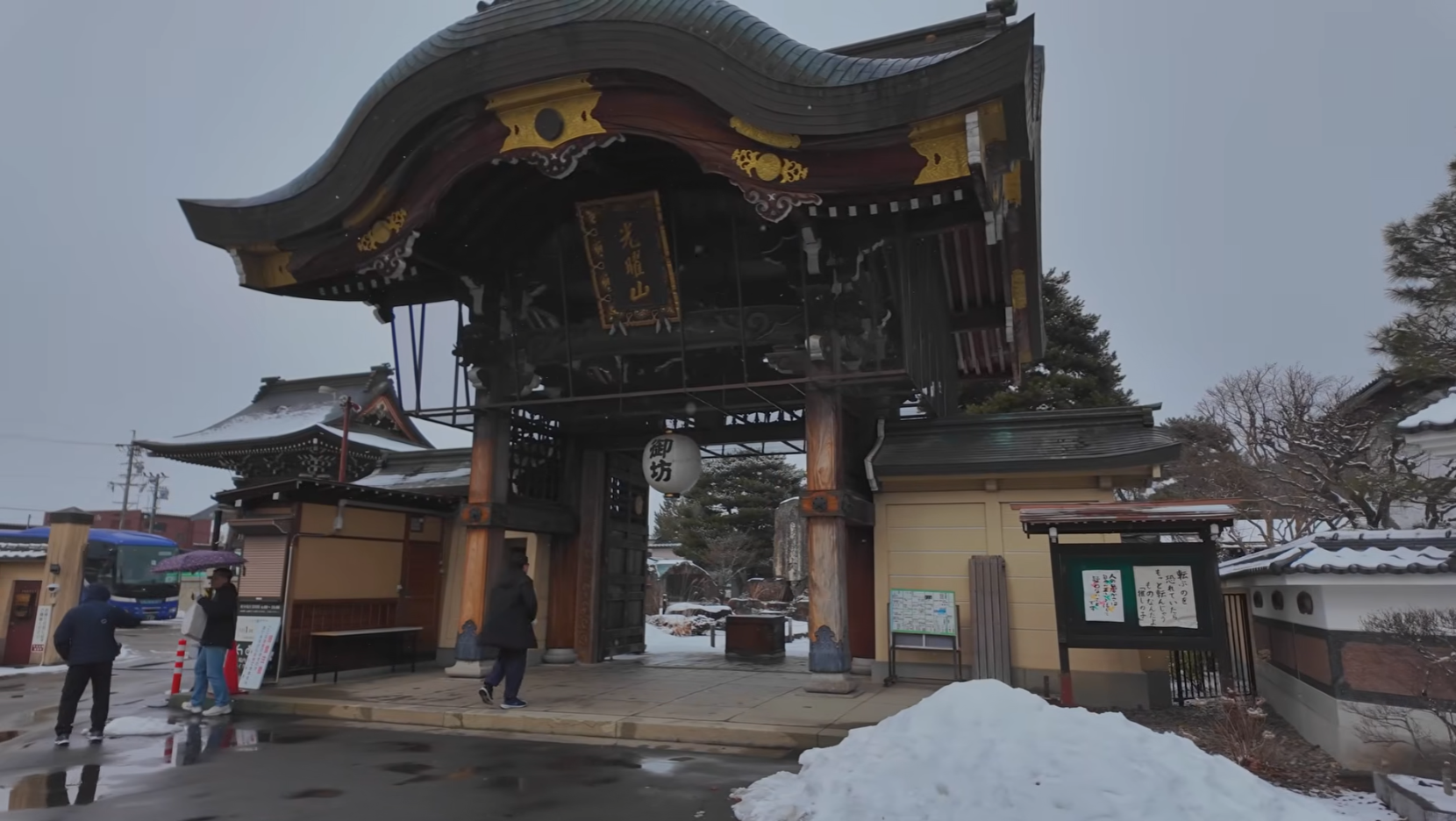
About the temple
Betsuin Shoren-ji is a Jodo Shinshu Buddhist temple located in the historic heart of Takayama, in the Sannomachi district. Founded as a branch temple (betsuin) of the great Nishi Honganji in Kyoto, its imposing dark wood architecture and large roofs contrast beautifully with the cobblestone streets of the old city that surround it. It is one of Takayama's most visited temples for its privileged location and the authenticity of its atmosphere, which seems unchanged since the Edo period.
History
Betsuin Shoren-ji was established in Takayama as a branch temple of Nishi Honganji in Kyoto, the central temple of the Jodo Shinshu Buddhist sect, one of the most widespread in Japan. The Jodo Shinshu sect, founded by monk Shinran in the 13th century, is characterized by its accessibility to ordinary people — unlike other Buddhist currents that required rigorous ascetic practice, Jodo Shinshu taught that anyone could achieve salvation through sincere faith in Amida Buddha. During the Edo period, Takayama was a city directly administered by the Tokugawa shogunate, making it an important commercial and cultural center of the Japanese Alps. The temple flourished during this period, becoming a spiritual center for the city's merchants, craftspeople, and families. Its great halls housed ceremonies and religious celebrations that were also fundamental social events for the community. The temple's current architecture is representative of the late Edo style, with its large dark wood main hall (hondo), its elaborate multi-layered roofs, and its carefully designed inner gardens. The complex has survived the centuries remarkably well, partly because Takayama was one of the few Japanese cities not bombed during World War II, preserving its historical architectural heritage intact.
🎴 Curiosities
The temple is a betsuin, meaning a branch temple or official delegation of the great Nishi Honganji in Kyoto — this grants it special religious authority within the Jodo Shinshu sect
The Jodo Shinshu sect to which it belongs is the largest in Japanese Buddhism, with over 10 million followers — its message of universal salvation without ascetic practices made it enormously popular among ordinary people
The temple's great roof is one of Takayama's most photogenic, especially in winter when snow covers it creating a typically Japanese scene reminiscent of illustrations from period books
It is located steps from the famous Sannomachi and Kamimachi streets, Takayama's historic heart with its sake houses and Edo period shops
The temple organizes Obon ceremonies in summer, when ancestors' spirits are honored with floating lanterns and traditional bon odori dances
The temple bell resonates every dawn and dusk, marking the rhythm of the day for residents of the historic district as it has done for centuries
Takayama is known as 'the little Kyoto of the Japanese Alps' and this temple is one of the best examples of why it deserves that nickname
The interior of the main hondo houses an image of Amida Buddha surrounded by golden ornamentations typical of Jodo Shinshu Buddhist art, characterized by its decorative richness in contrast with Zen sobriety
During Takayama's Autumn Festival (October), the temple's surroundings come alive with the passage of the famous Hachiman Matsuri festival floats
The goshuin of this temple is especially appreciated because it reflects the characteristic calligraphy of the Jodo Shinshu tradition, with broad confident strokes conveying the trust in universal salvation that is the heart of this doctrine