About the temple
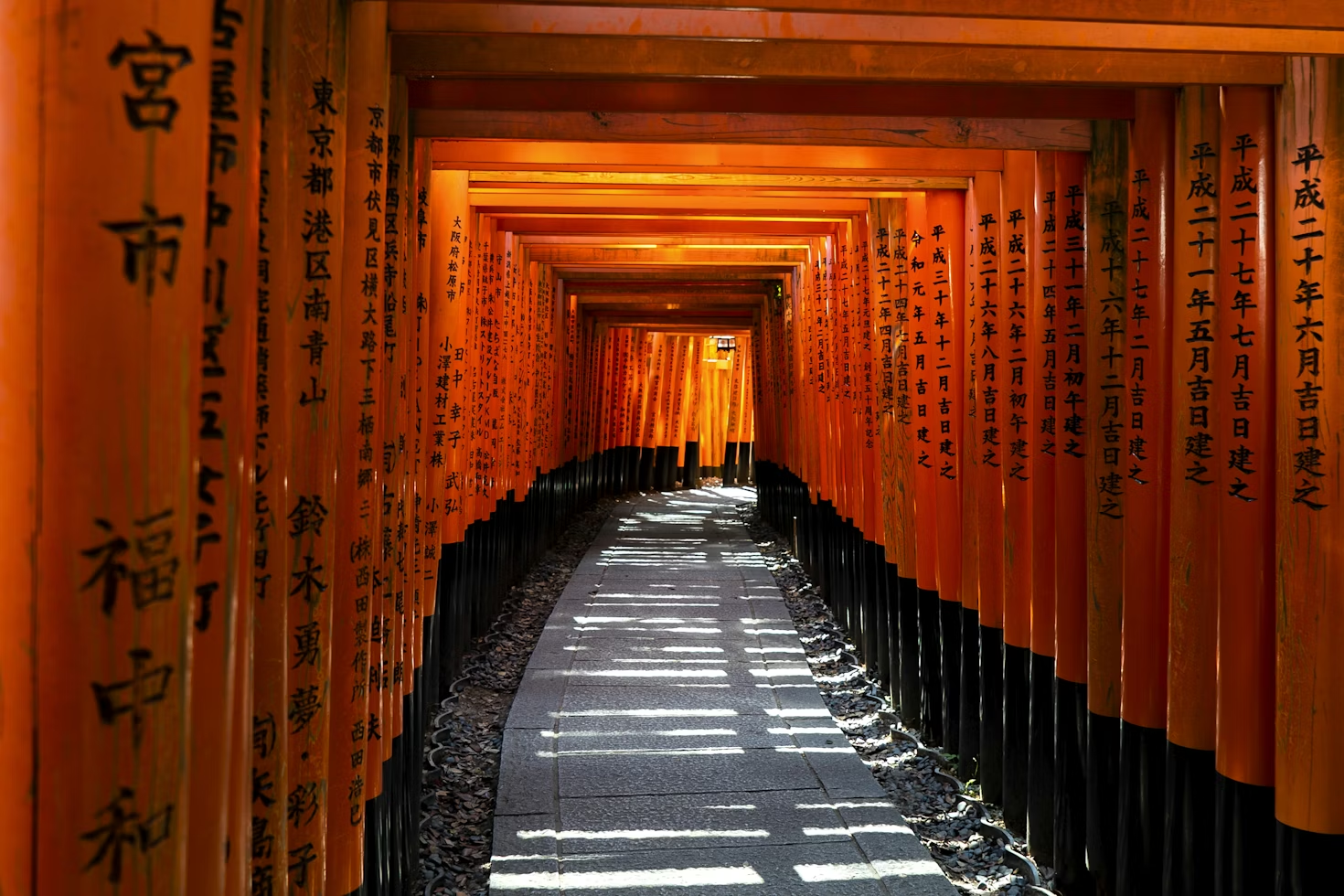
Fushimi Inari Taisha is the head shrine of the more than 30,000 shrines dedicated to Inari scattered throughout Japan. Nestled on the slopes of Mount Inari south of Kyoto, it is world-famous for its thousands of vermilion torii gates that form winding tunnels along 4 kilometers of mountain paths. More than a simple shrine, Fushimi Inari is an entire sacred mountain, with altars and sub-shrines distributed from the base to the summit at 233 meters altitude. It is Japan's most visited place of worship at New Year, when more than three million people come to offer their first prayers of the year.
History
The history of Fushimi Inari dates back to 711 AD, when according to tradition the Hata clan, a family of Korean origin that had settled in the Kyoto region, erected the original shrine on the summit of Mount Inari. Legend tells that a clan member shot an arrow at a block of rice that transformed into a white swan and flew to the mountain top, marking the sacred place where the shrine was to be built. During the Heian period (794-1185), with the establishment of Kyoto as the imperial capital, Fushimi Inari gained enormous privileges and recognition. In 816 it was elevated to the highest rank of the imperial shrine system. Emperors and nobility began actively patronizing it, and the deity Inari became associated not only with agriculture but also with commerce, industry, and business success. The practice of donating torii to the shrine as an offering of gratitude began during the Edo period (1603-1868), when merchants and businesspeople who had prospered under Inari's protection started funding the erection of these sacred gates. Each torii bears the donor's name and offering date inscribed at its base, creating a unique historical record of Japanese business devotion across centuries. During the Meiji Restoration (1868), when the government ordered the separation of Shinto and Buddhism, Fushimi Inari was designated an official Shinto shrine, consolidating its current religious identity. Throughout the 20th century the number of torii continued to grow, and today companies of all sizes, from large corporations to small family businesses, continue donating new torii at a cost ranging from several hundred thousand to several million yen depending on size.
🎴 Curiosities
There are over 10,000 orange torii on the mountain, donated by companies and individuals
The fox (kitsune) is the messenger of the Inari deity — you'll find fox statues throughout the shrine
The full climb to the summit takes about 2-3 hours and reaches 233 meters altitude
The inscriptions on the torii show the donor's name and date — the oldest are over 100 years old
The shrine is open 24 hours, and at night the atmosphere is completely different: mystical and silent
The shrine's full name is Fushimi Inari Taisha — 'Taisha' means 'grand shrine', the highest rank in the Shinto hierarchy
The torii are not merely decorative: each one marks the transition between the profane world and the sacred. Passing through a torii means entering the deity's space
The vermilion-orange color of the torii is not merely aesthetic — in Shinto cosmology it represents the vital energy of the sun and acts as protection against evil spirits
Mount Inari has exactly four peaks, each with its own shrine: Sannomine, Ninomine, Ichinomine, and Mitsuishi. Serious pilgrims climb to the last one
The fox (kitsune) is not the shrine's deity but its messenger. Inari can appear as an elderly person, a youth, or a white fox — kitsune statues typically carry a key in their mouths, symbolizing access to the rice granaries
The inscriptions on the torii reveal a fascinating history: the oldest date from the Edo period, the most recent from this year. Some bear the names of companies that no longer exist
At night, the shrine transforms completely. Without tourists and barely lit, the torii tunnels acquire a mystical dimension that is impossible to experience during the day
The complete round-trip path to the summit is approximately 4 km but the accumulated elevation changes make the ascent demanding — comfortable footwear and water are recommended
There are over 10,000 torii on Mount Inari, but not all are the same size. The largest measure over 6 meters in height and can cost several million yen
Every year on February 5th the Hatsuuma Taisai is celebrated, the shrine's most important festival, when thousands of believers come to give thanks for favors received during the previous year