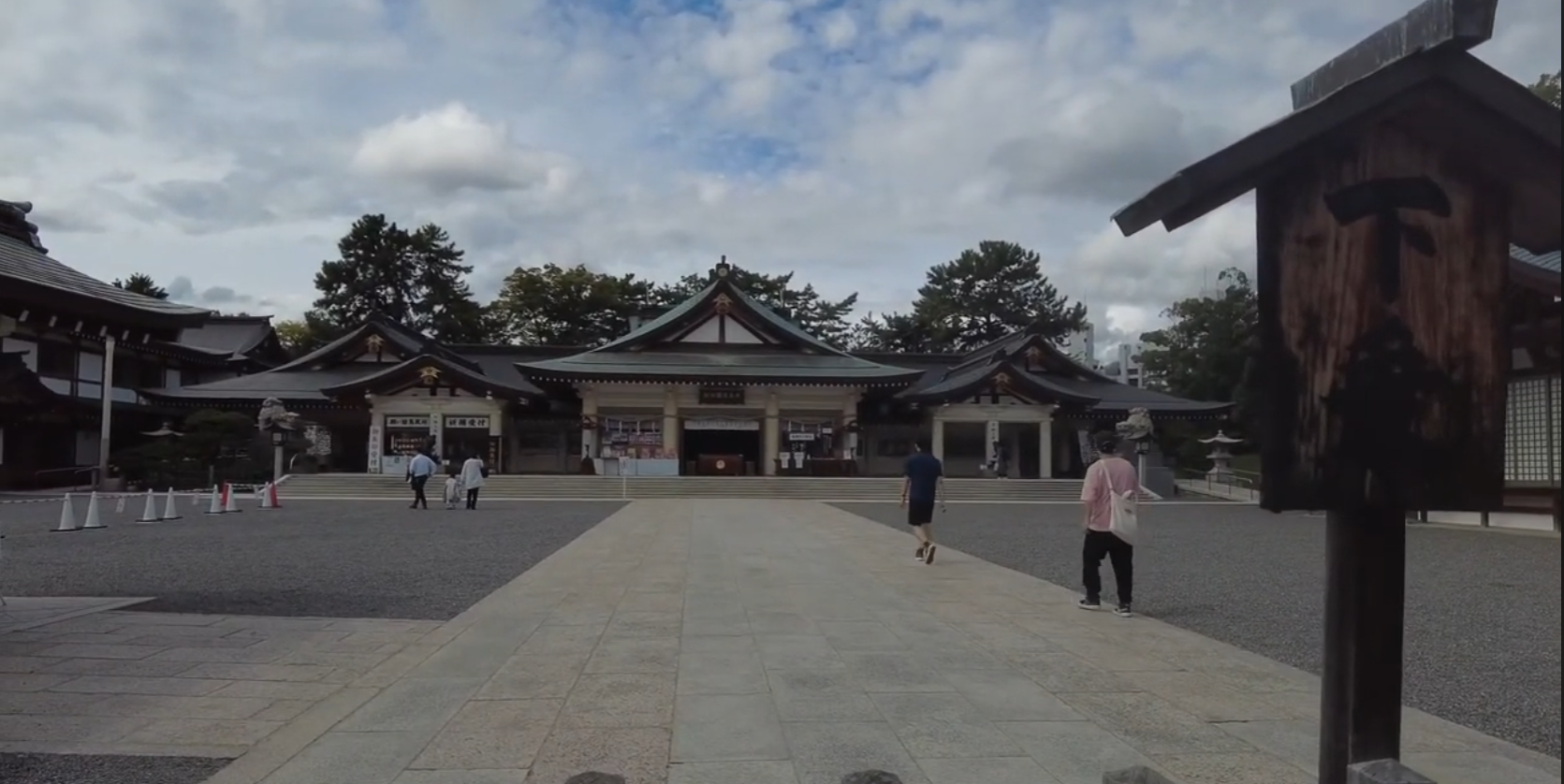
About the temple
Hiroshima Gokoku-jinja is one of 52 Gokoku shrines distributed throughout Japan, created during the Meiji era to venerate the spirits of those who gave their lives for the country. Located within the grounds of Hiroshima Castle, on an island surrounded by historic moats, the shrine occupies a unique place in Japan's spiritual geography: it is the only major shrine in the country built, destroyed by an atomic bomb, and completely rebuilt. Its existence is simultaneously a testament to the horror of war and a powerful symbol of the resilience and will for peace of the people of Hiroshima. The atmosphere surrounding the shrine, with the castle walls and moats full of carp, creates a space for reflection and contemplation that few cities in the world can offer.
History
The history of Hiroshima Gokoku-jinja begins in 1868, at the dawn of the Meiji Restoration, when the new imperial government decided to create a network of shrines throughout the country dedicated to honoring soldiers fallen in the process of national modernization and unification. The Hiroshima shrine was among the first to be established, given that the city was an important military center and the port from which troops departed for conflicts abroad. During the following decades, the shrine grew in importance and in the number of spirits it housed. Each armed conflict in which Japan participated — the First Sino-Japanese War of 1894-95, the Russo-Japanese War of 1904-05, World War I, and finally World War II — added thousands of new names to the shrine's records. By the second half of the 20th century, the shrine housed the spirits of more than 92,000 people from Hiroshima Prefecture who had died in combat. On August 6, 1945, at 8:15 in the morning, the atomic bomb Little Boy exploded 600 meters above Hiroshima. The shrine, located approximately 900 meters from the hypocenter, was completely destroyed along with the historic castle and virtually the entire city. Nothing remained of the original buildings. The shrine priests who survived the explosion temporarily moved the spirit tablets to a safe location and continued holding ceremonies with whatever means were available. Reconstruction of the shrine began in 1956, eleven years after the bombing. It was a slow and deliberate process, funded largely by the families of the fallen and by the Hiroshima community. The new shrine was built on the same site as the original, within the castle grounds, as an explicit declaration that the memory of the fallen would not be erased. The consecration of the new main building in 1956 was a moment of enormous emotional weight for the city, which was then beginning its long process of physical and spiritual reconstruction.
🎴 Curiosities
The shrine was destroyed by the atomic bomb on August 6, 1945, just 900 meters from the explosion's hypocenter. It is the only major shrine in Japan destroyed by a nuclear weapon
The spirit tablets (reiji) containing the names of the 92,000 fallen venerated at the shrine survived the bomb because the priests moved them in time — they are the only element of direct continuity between the original shrine and the current one
Every year on August 6, coinciding with the bombing anniversary, the shrine holds a special commemoration ceremony that attracts thousands of people from throughout the prefecture
The Floating Lantern Festival (Toro Nagashi) held on August 6 on the Motoyasu River in front of the Peace Park is intimately linked to the shrine — the lanterns represent the souls of the dead finding their way to the afterlife
Within Hiroshima Castle's grounds, also rebuilt in 1958, the shrine and castle together form a historic complex symbolizing the city's double resurrection: military and spiritual
The location on the castle island, surrounded by moats with carp, creates an atmosphere of deep serenity that contrasts with the historical tragedy of the place
The shrine houses an important collection of historical military objects from Hiroshima Prefecture, including uniforms, weapons, and documents from the Meiji period through World War II
Unlike the Peace Memorial Park, which attracts millions of international tourists, the Gokoku-jinja is visited mainly by Japanese — especially by veterans' families and history students
The shrine is one of the traditional starting points for school visits to Hiroshima's peace monuments, combining memory of the fallen with reflection on the consequences of war
The shrine's reconstruction was funded entirely by private donations from the families of the fallen and the local community — no government funds were used, a significant gesture of community autonomy