About the temple
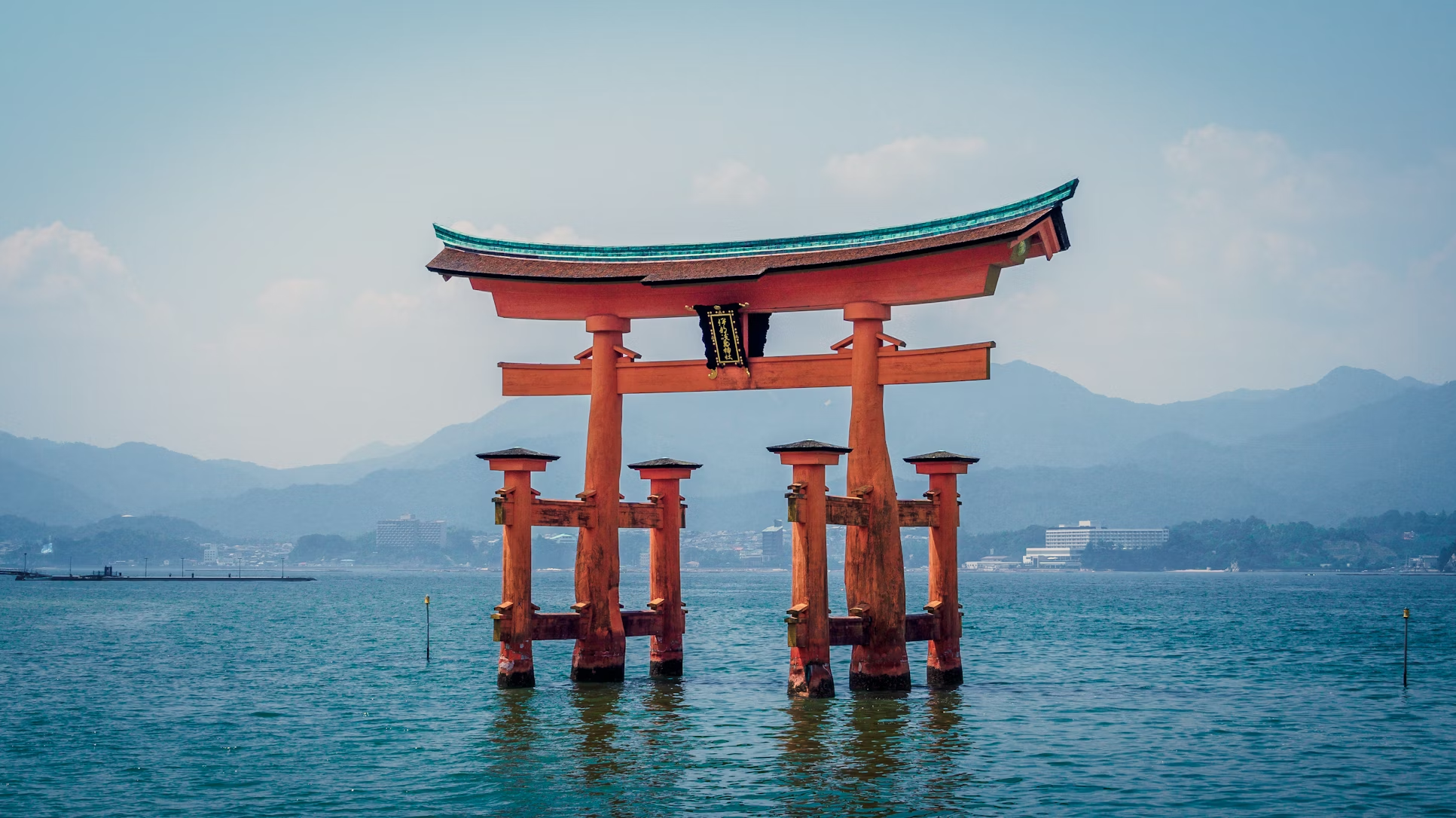
Itsukushima Jinja, popularly known as the shrine of Miyajima, is one of the most iconic and magical places in all of Japan. Located on the sacred island of Itsukushima (Miyajima) in Hiroshima Bay, this Shinto shrine appears to float on the waters of the Seto Inland Sea thanks to its architecture built on pillars. Its great 16-meter-high red torii gate, which emerges from the sea at high tide, is one of the most photographed and recognizable images in the country, a perfect symbol of the harmony between the sacred and nature. Dedicated to the three goddesses of the sea and storms (the Munakata Sanjoshin), the shrine offers a unique experience: the contrast between the vibrant red of its buildings, the blue of the sea, and the green of the island's forests creates a landscape of overwhelming beauty that has been declared a UNESCO World Heritage Site. It is one of Japan's three most famous scenic views and a place where ancestral devotion merges with natural wonder in its purest state.
History
The history of Itsukushima Jinja dates back to 593, during the reign of Empress Suiko, when Saeki no Kuramoto established the first shrine in honor of the three sea goddesses: Ichikishimahime-no-mikoto, Tagorihime-no-mikoto, and Tagitsuhime-no-mikoto, daughters of Susanoo-no-mikoto. The island itself was considered sacred from ancient times, so the shrine was built over the water to avoid profaning the divine land. In 1168, the powerful leader of the Taira clan, Taira no Kiyomori, rebuilt and expanded the shrine in shinden-zukuri style (that of Heian period aristocratic residences), turning it into the magnificent complex we see today. Kiyomori made it the family shrine of the Heike and protected it fervently. Over the centuries it suffered fires, typhoons, and wars (including the Battle of Itsukushima in 1555, won by Mori Motonari), but it was rebuilt while faithfully maintaining the original style. After the Meiji Restoration, the shrine retained its spiritual importance. In 1996 it was inscribed as a UNESCO World Heritage Site along with much of the island, recognizing its exceptional cultural value and the perfect integration of architecture with the maritime and forested landscape.
🎴 Curiosities
The great 16-meter-high torii (O-torii) is built with camphor wood and is not fixed to the seabed: it is held by its own weight and the precision of traditional Japanese engineering. At low tide you can walk right up to it
The entire shrine complex, including boardwalks and buildings, is constructed on pillars over the water, making the whole site appear to float at high tide — an unforgettable image especially at sunset or at night with lighting
The island of Miyajima is inhabited by hundreds of sacred deer that roam freely among visitors; according to Shinto tradition, they are messengers of the gods
It is forbidden to be born or die on the island, as it is considered too sacred. That is why the shrine was built over the sea, so that pilgrims would not step on the divine land
In addition to maritime protection and against storms, the three goddesses are worshipped for success in business, arts, music, and safe childbirth. There are very beautiful omamori related to the sea and creativity
In the precinct there is a Noh theater stage built over the water, where gagaku performances and sacred dances are held on special occasions
The torii has symbols of the sun and moon on its ends, and on one side it bears the current name while the other preserves an ancient spelling of the shrine's name
At low tide the landscape changes completely: the torii is left stranded on the sand and you can touch it up close, creating two radically different experiences in the same place
Itsukushima Jinja is part of Japan's Three Scenic Views (along with Matsushima and Amanohashidate) and receives millions of visitors a year, but it retains a unique spiritual atmosphere thanks to the continuous devotion of the locals