About the temple
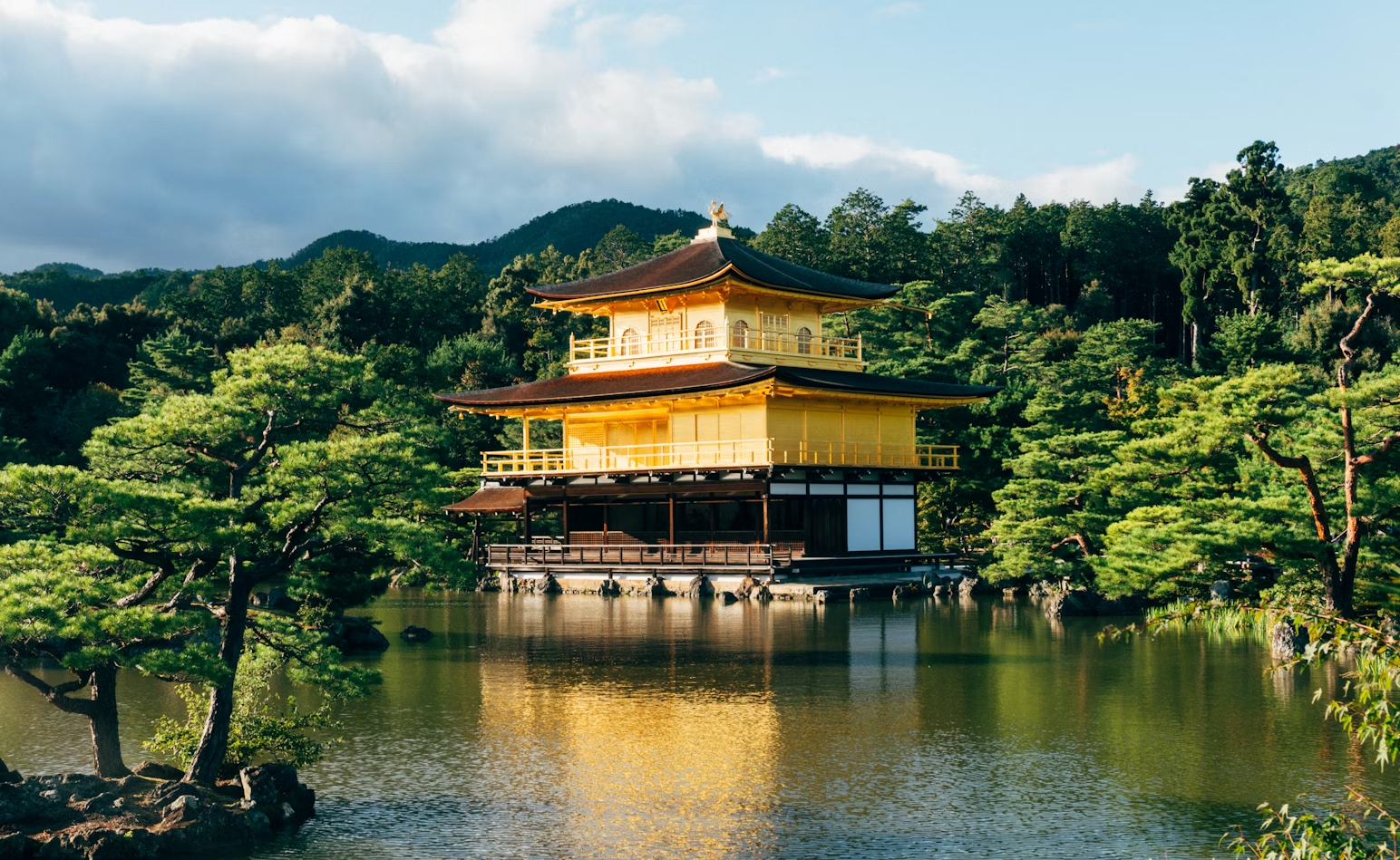
Kinkaku-ji, known worldwide as the Golden Pavilion, is one of the most dazzling and iconic images of Japan. Located in northern Kyoto, this Rinzai Zen temple (officially called Rokuon-ji) appears to float on the waters of Kyoko-chi pond like a golden dream. Its top two floors are completely covered in pure gold leaf, shining intensely under the sun and reflecting with perfect symmetry in the mirror of the water, creating one of the most hypnotic views in the country. Originally built as a retirement villa for Shogun Ashikaga Yoshimitsu in the late 14th century, it combines three distinct architectural styles across its three floors and represents the culmination of Kitayama culture. Surrounded by a Zen garden with moss, pines, and rocks, the pavilion radiates a beauty that transcends time: it is simultaneously a symbol of earthly power, aesthetic refinement, and spiritual serenity. Declared a UNESCO World Heritage Site, Kinkaku-ji embodies the Japanese ability to transform opulence into a meditation on impermanence and purity.
History
The history of Kinkaku-ji begins in 1397, when Shogun Ashikaga Yoshimitsu, the third shogun of the Ashikaga shogunate, acquired the lands of an old aristocratic villa and built his retirement residence, known as Kitayama-dono. Yoshimitsu, a great patron of the arts influenced by Ming dynasty Chinese culture, turned the complex into the center of the refined Kitayama culture, where nobles, artists, and Zen monks gathered. After his death in 1408, following his will, his son Yoshimochi converted the villa into a Rinzai Zen temple, naming it Rokuon-ji (Deer Garden Temple), in reference to the place where Buddha gave his first sermon. The Golden Pavilion (Kinkaku) functioned as a shariden, a reliquary housing Buddha's relics. Over the centuries, the temple suffered multiple fires, especially during the Ōnin War (1467-1477), which devastated Kyoto. The current pavilion is a faithful reconstruction completed in 1955, after a young novice monk deliberately set it on fire in 1950 — an act that inspired Yukio Mishima's famous novel *The Temple of the Golden Pavilion*. In 1987, the gold leaf was renewed with a thicker layer, making its shine even more spectacular today.
🎴 Curiosities
Each of the three floors of the pavilion has a different architectural style: the first follows the shinden-zukuri style of Heian aristocratic residences, the second the buke-zukuri of samurai houses, and the third the Chinese Zen style — a unique fusion that symbolizes the cultural evolution of the era
The gold leaf covering the top two floors is approximately 0.5 microns thick; in the 1987 renovation five times more was used than in the original, making it shine with greater intensity
Kyoko-chi Pond (Mirror Pond) is designed to perfectly reflect the pavilion; the best view is obtained from the garden path, especially at dawn or when it snows
At the top of the roof there is a golden phoenix (hōō), symbol of rebirth and purity, that seems to watch over the complex
The 1950 fire was started by a 21-year-old novice monk who, according to his confession, acted out of hatred for excessive beauty; the event destroyed the original statue of Yoshimitsu and sacred relics, but the temple was reborn brighter
Kinkaku-ji inspired his grandson Ashikaga Yoshimasa to build the Silver Pavilion (Ginkaku-ji), creating Kyoto's famous golden-silver duo
The garden is covered in intense green moss that contrasts wonderfully with the gold, and contains rocks and pines arranged according to Zen principles of harmony with nature
Although you cannot enter the pavilion, from the other side of the pond you can see the statues of Shaka Buddha and Yoshimitsu himself when the sliding doors are open
Kinkaku-ji is part of the Historic Monuments of Ancient Kyoto declared a UNESCO World Heritage Site in 1994
The beauty of the pavilion changes with the seasons: in winter under snow it looks like an ethereal jewel, while in autumn the red maples create a spectacular contrast with the gold