About the temple
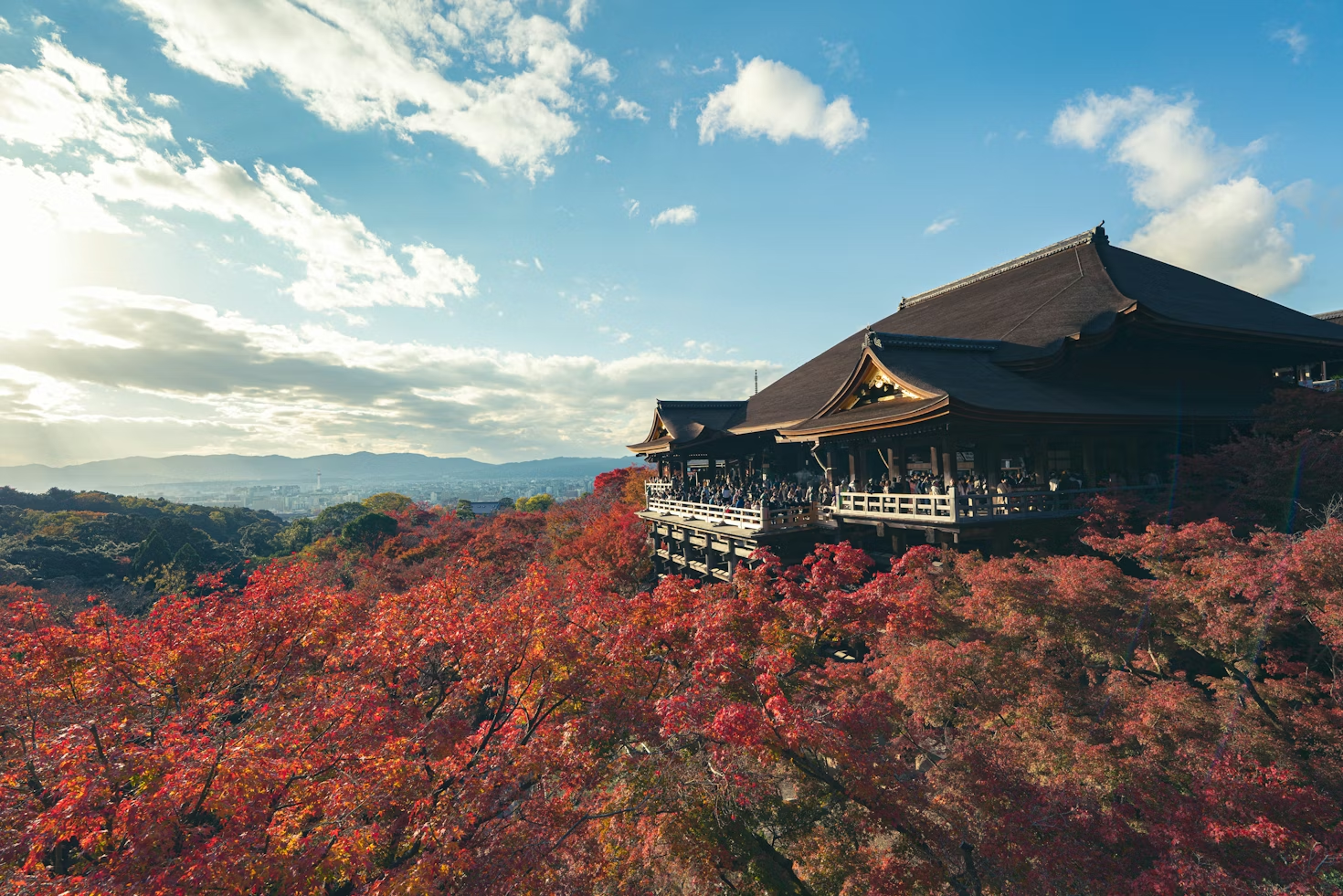
Kiyomizu-dera, known as the Pure Water Temple, is one of the most impressive and visited Buddhist temples in Kyoto. Located on the eastern hills of Higashiyama, this sacred complex appears to hang over the forest thanks to its famous wooden terrace (Kiyomizu no Butai), which juts out 13 meters above the hillside without using a single nail. From there, visitors enjoy a spectacular panoramic view of the city, especially magical during the cherry blossom season in spring or the red foliage of the maples in autumn. Dedicated to the eleven-faced, thousand-armed Kannon, the goddess of mercy, the temple owes its name to the Otowa-no-taki waterfall, whose crystal-clear waters spring from the mountain and are considered purifying. The combination of traditional architecture, lush nature, and popular devotion makes Kiyomizu-dera a place where the spiritual and the aesthetic merge into an unforgettable experience. Declared a UNESCO World Heritage Site, it represents the very essence of beauty and faith in Japan's ancient capital.
History
The history of Kiyomizu-dera dates back to 778, during the early Heian period. According to legend, the monk Kenshin (later Enchin) had a revelatory dream that led him to Mount Otowa, where he found a hermit named Gyoei Koji practicing austerities under a waterfall. Gyoei, considered an incarnation of Kannon, gave him a statue of the goddess carved from a sacred tree. Shortly afterward, in 780, the general Sakanoue no Tamuramaro, Japan's first shogun, encountered the monk while hunting a deer to cure his sick wife. Converted to faith in Kannon, Tamuramaro donated land and built the main temple, naming it Kiyomizu (“pure water”) after the clarity of the waterfall. Over the centuries, the temple was destroyed by fire on numerous occasions, especially during civil wars. The current buildings date from 1631-1633, when Shogun Tokugawa Iemitsu ordered a complete reconstruction. Originally affiliated with the Hossō sect of Nara, it became independent as the Kita-Hossō sect in 1965. In 1994 it was inscribed as a UNESCO World Heritage Site as part of the Historic Monuments of Ancient Kyoto.
🎴 Curiosities
The main terrace (Kiyomizu no Butai) is built entirely of wood without a single nail, supported by 168 cypress pillars; from it one contemplates Kyoto as if floating over a sea of cherry blossoms or maples depending on the season
The Otowa-no-taki waterfall is divided into three streams: drinking from one brings longevity, from the second success in studies or work, and from the third fortune in love. Tradition recommends drinking from only one so the wish comes true
Behind the main hall stands Jishu Shrine, dedicated to the deity of love and matchmaking. There are two stones 18 meters apart: walking from one to the other with eyes closed ensures finding true love
In the Edo period, people jumped from the terrace (13 meters high) so that a wish would be granted; of the 234 recorded jumps, about 85% survived
The temple houses a secret statue of the thousand-armed Kannon that is only shown every 33 years (the next will be in 2033)
In addition to the sacred water, there is a dark tunnel known as “the womb of the bodhisattva” where one walks in darkness touching beads to symbolize rebirth
Kiyomizu-dera is especially beautiful in spring (sakura) and autumn (momiji), when the trees create a spectacular contrast with the wood and red roofs
The complex includes more than 30 buildings and receives millions of visitors a year, but retains an atmosphere of deep devotion thanks to the continued faith in Kannon
There is a stone statue that grants wishes: turning its head toward the direction of the loved one helps the romance prosper
The dragon-shaped fountain (Seiryū) and the numerous statues of Jizō and other protectors enrich the spiritual journey through the precinct