About the temple
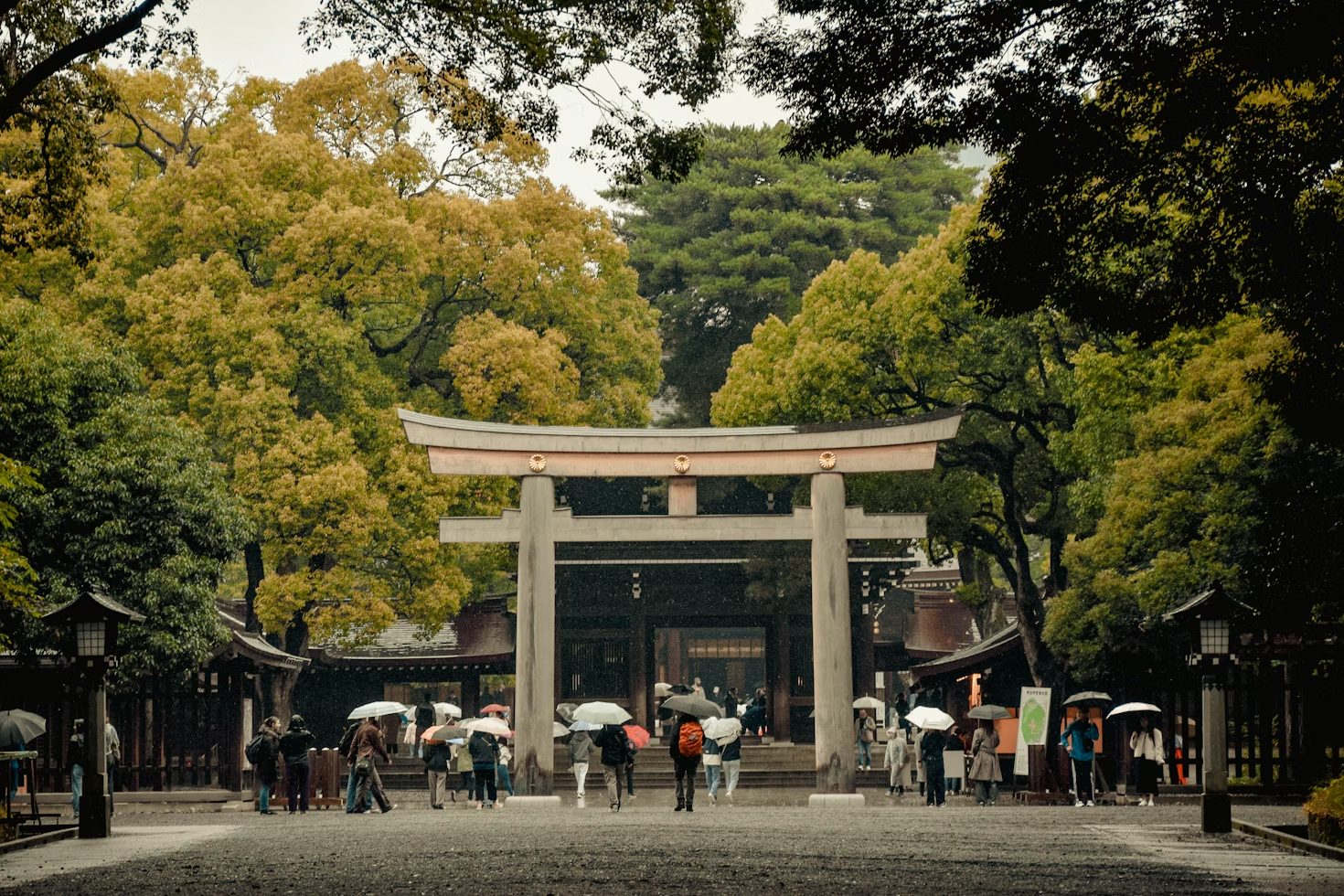
Meiji Jingu is one of the most important and visited Shinto shrines in Japan, an oasis of serenity and nature in the heart of bustling Tokyo. Dedicated to the deified spirits of Emperor Meiji and Empress Shoken, who led Japan's transformation from a feudal country to a modern nation during the Meiji Restoration, this shrine offers a striking contrast: after crossing its imposing wooden torii gate, the noise of the city disappears and one enters a vast forest spanning more than 70 hectares. The paths shaded by over 100,000 trees donated from all over Japan create an atmosphere of profound spiritual peace. The main shrine building, faithfully rebuilt after World War II, radiates a sober and elegant beauty that symbolizes the eternal gratitude of the Japanese people toward the imperial couple who opened Japan to the world. It is a place where the traditional and the modern coexist in perfect harmony, reminding us that even amid vertiginous progress, the spirit of nature and ancestral devotion endure.
History
Meiji Jingu was established in 1920 to commemorate the virtues of Emperor Meiji (1852-1912) and his wife, Empress Shoken (1849-1914). After the emperor's death, the Japanese people expressed a collective desire to eternally honor the imperial couple who had guided the Meiji Restoration (1868), the process that modernized Japan, ended the shogunate, and opened the country to the Western world. Construction began in 1915 on an old iris field that the imperial couple used to visit. Over 100,000 trees donated by citizens from all over Japan were planted by volunteers (around 110,000 people) to create an artificial forest that, over time, would become a self-sustaining natural ecosystem. The shrine was officially inaugurated on November 1, 1920. The original buildings were destroyed during the Tokyo air raids in World War II. The current reconstruction, funded by public donations, was completed in 1958, faithfully maintaining the traditional nagare-zukuri style with Japanese cypress and copper roofs. Today it is one of Japan's most beloved shrines and celebrated its centenary in 2020.
🎴 Curiosities
The forest surrounding the shrine is artificial: over 100,000 trees of 234 different species were donated from all over Japan and planted by volunteers. It was designed to become a self-sustaining natural forest after 100-200 years, with no human intervention since its creation
The main torii (Myojin torii) is Japan's largest wooden torii: it stands about 12 meters tall, made of Taiwanese cypress over 1,500 years old, and marks the entrance to the sacred world
Numerous traditional Shinto weddings are held at the shrine; it is one of the most popular places in Japan to celebrate marriages
During Hatsumode (first shrine visit of the year), Meiji Jingu receives millions of visitors (often over 3 million in the first three days of the year), making it one of the busiest shrines in the country
There is a famous well called Kiyomasa no Ido (Kiyomasa's Well), where people pray for the fulfillment of wishes
In the precinct you can see barrels of sake and French wine donated as offerings; the wine barrels reflect the international openness promoted by Emperor Meiji
The Inner Garden includes a beautiful iris garden that blooms in June, inspired by the empress's love of flowers
The shrine also houses the Meiji Jingu Museum, with objects related to the emperor's life, including his carriage
Although it is in the heart of Tokyo (near Harajuku and Yoyogi Park), the forest creates a microclimate where over 100 species of birds and numerous rare insects and plants live
The main path from Harajuku Station under the great torii offers one of the most impressive transitions from the modern city to sacred nature