About the temple
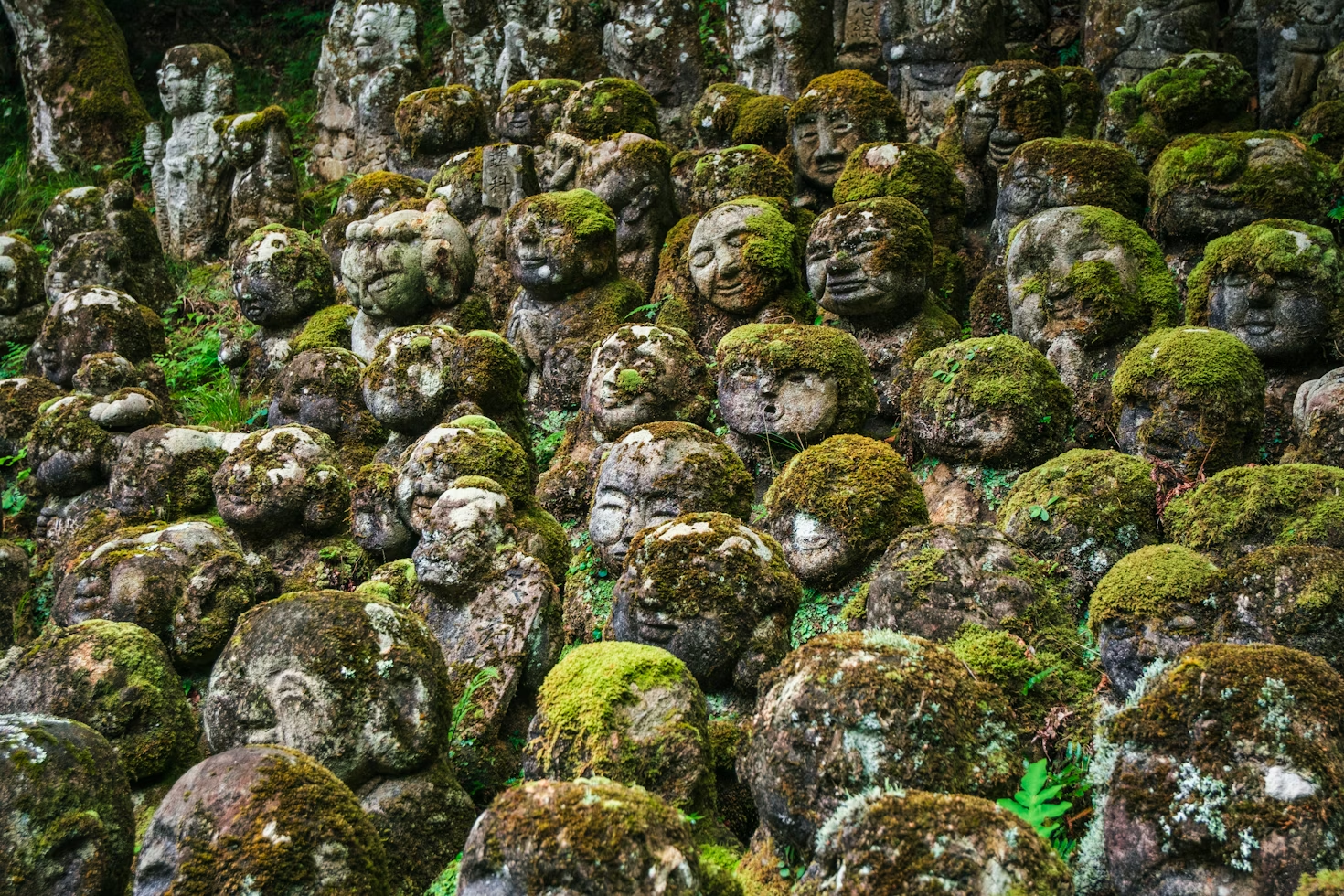
Otagi Nenbutsu-ji is one of the most charming and unique temples in Kyoto, a hidden gem nestled in the hills of northwestern Arashiyama that feels like a living garden of stone characters. Surrounded by greenery and moss, this Tendai sect Buddhist temple houses more than 1,200 rakan statues (disciples of Buddha), each hand-carved by ordinary people between 1981 and 1991. With expressions ranging from contagious laughter and deep meditation to funny, angry, or tender poses, these figures convey a touching humanity that contrasts with the usual solemnity of Japanese temples. The moss that covers them over time gives them an ancient and organic appearance, as if they had always been there. It is a space of peace, humor, and reflection where Buddhist devotion is expressed with warmth and closeness, far from the crowds of more famous temples.
History
The history of Otagi Nenbutsu-ji dates back to 766, when Empress Shōtoku ordered its original foundation in the Higashiyama district near Gion. In the early Heian period, a flood of the Kamo River completely destroyed it. It was rebuilt by the monk Senkan Naigu (918-984) of the Tendai sect, who personally carved the main image: a thousand-armed Kannon that protects against bad luck (Yaku-yoke Senju Kannon). Over the centuries it suffered damage from floods, civil wars, and typhoons. In 1922 it was moved to its current location in the hills of Saga-Arashiyama for preservation. In the 1950s a typhoon damaged it severely again. The turning point came in 1955 with the arrival of the monk and sculptor Kocho Nishimura (1915-2003) as head priest. Under his direction, the temple was restored for over thirty years and, between 1981 and 1991, pilgrims and amateurs from all over Japan were invited to carve the 1,200 rakan statues, each unique and personal, as a project of renewal and collective devotion.
🎴 Curiosities
Each of the more than 1,200 rakan statues is completely unique: they were carved by ordinary people (non-professionals) who pilgrimaged to the temple to learn from master Nishimura. Some laugh, others meditate, drink sake, play instruments or show funny or emotional expressions
The moss that covers many statues gives them a millennia-old appearance and integrates them perfectly with the surrounding forest nature. It is said that if you search long enough, you can find a rakan that looks like you or someone you know
The temple's main image is the Yaku-yoke Senju Kannon (thousand-armed Kannon that protects against bad luck), carved by Senkan Naigu himself in the 10th century
The temple belongs to the Tendai sect and its full name is Otagi Nenbutsu-ji (“Otagi Nenbutsu Invocation Temple”)
It is located on a quiet hill north of Arashiyama, far from the crowds of the bamboo grove and Togetsu-kyo bridge, giving it a particularly serene and magical atmosphere
Many statues reflect the hobbies or personalities of their carvers: there are rakan with glasses, with pets, in pairs or even with tengu features (mountain spirits)
The precinct is small but full of life; walking among the statues feels like strolling among an eccentric and wise crowd of friends
Otagi Nenbutsu-ji is considered a “healing” temple thanks to its positive energy and the cheerful character of its rakan
In addition to the statues, it preserves ancient buildings such as the main hall from the Kamakura period and a traditional gate
It is one of Kyoto's lesser-known temples, but increasingly appreciated by those seeking authentic and humanly charming experiences