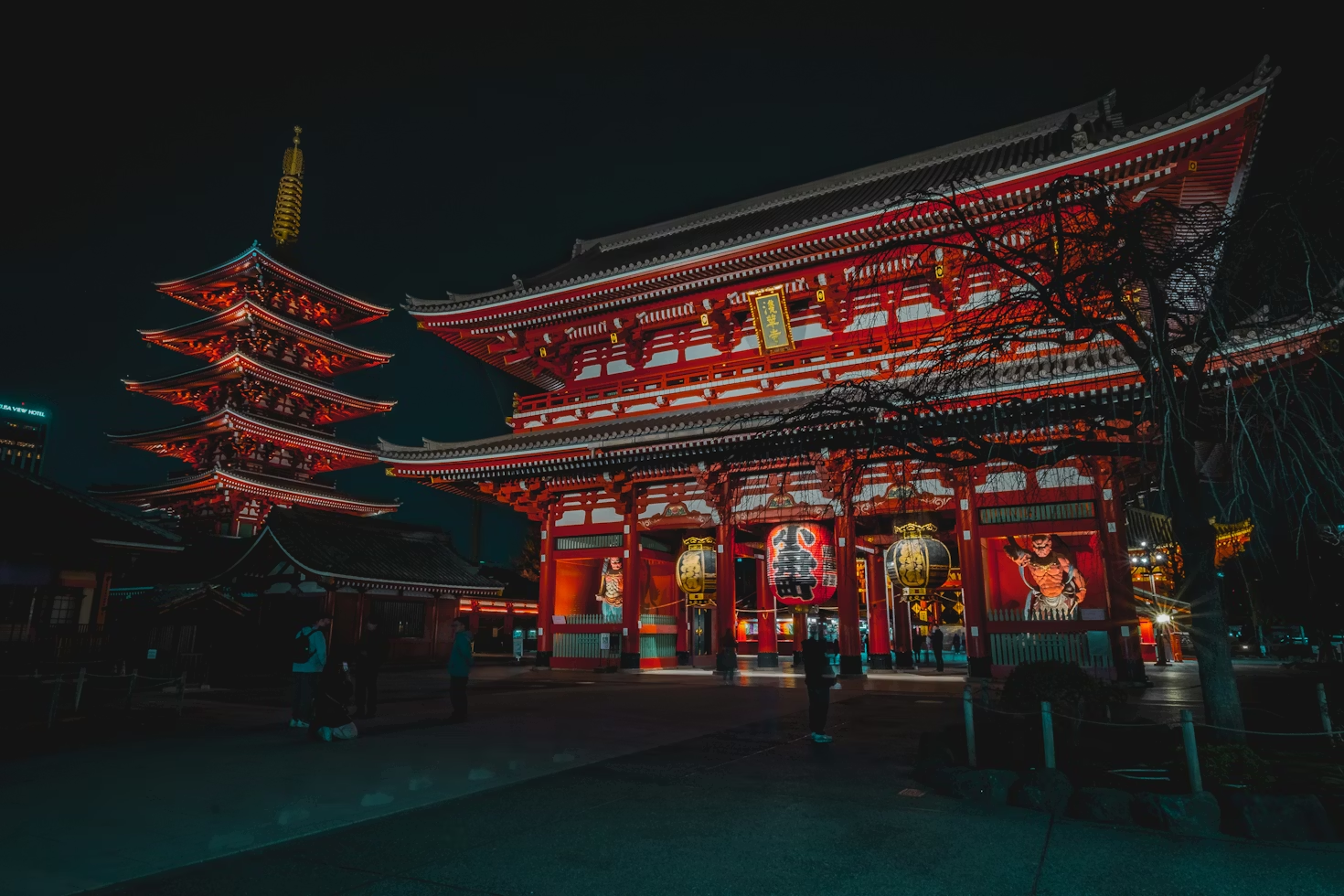
About the temple
Senso-ji, also known as Asakusa Kannon, is the oldest and most visited Buddhist temple in Tokyo, a vibrant place where millennial devotion mixes with the bustle of daily life in the heart of the Asakusa district. Dedicated to Kannon, the bodhisattva of mercy and compassion, this temple receives millions of visitors a year who cross its famous Kaminarimon (Thunder Gate) with its enormous 700 kg red lantern. From the legendary Kannon statue found in the Sumida River to its five-storied pagoda and the perfumed smoke of incense enveloping the main hall, Senso-ji represents the very essence of Japanese popular culture: a perfect fusion between the sacred and the everyday. Surrounded by the lively Nakamise street, filled with souvenir stalls and traditional sweets, it is a space where the faithful pray for good luck while tourists are captivated by the color and inexhaustible energy of Asakusa.
History
The history of Senso-ji dates back to the year 628, during the Asuka period. According to legend, two fisherman brothers, Hinokuma Hamanari and Takenari, found a small golden statue of Kannon (approximately 5.5 cm) in their nets in the Sumida River. No matter how many times they returned it to the water, the statue always came back to them. The village headman, Haji no Nakatomo, recognized its divine nature, converted to Buddhism, and turned his house into a small temple. In 645, the monk Shokai built the main hall and, following a revelation in a dream, hid the original statue (hibutsu) so it would never be shown to the public. Over the centuries, the temple was expanded and protected by figures such as the monk Ennin (9th century) and the Tokugawa shoguns, who made it one of the guardian temples of Edo. The original buildings were destroyed multiple times by fires, earthquakes, and finally by the World War II bombings in 1945. The current reconstruction of the main hall was completed in 1958 thanks to popular donations, faithfully maintaining the traditional style. Today Senso-ji is independent from the Tendai sect and remains the most visited temple in the world.
🎴 Curiosities
The original Kannon statue is a hibutsu (secret image) that has never been shown to the public since 645; it is only displayed every 33 years on very special occasions
The Kaminarimon, the outer gate, is guarded by the statues of Fujin (wind god) and Raijin (thunder god), and its enormous red lantern is one of Tokyo's most photographed symbols
Nakamise-dori street, over 200 meters long with stalls, has existed for centuries and sells everything from traditional sweets like ningyo-yaki to souvenirs and yukatas
The smoke from the large incense burner in front of the main hall is considered purifying: visitors fan the smoke toward the parts of the body they wish to heal
The five-storied pagoda is the second tallest of its kind in Japan and offers a spectacular view of the complex, especially when illuminated at night
Next to the Buddhist temple stands the Shinto shrine Asakusa Jinja (Sanja-sama), dedicated to the three founders of the temple (the two brothers and the village headman), which celebrates the famous Sanja Matsuri in May
Inside the main hall there is a public Kannon image (maedachi) carved by Ennin for the faithful to worship
During Hatsumode (first shrine visit of the year) it receives more than 3 million people in the first three days
There is a tradition of buying omikuji (fortunes): if it is bad, it is tied to the temple's racks so the bad luck stays there
The full name of the temple is Kinryū-zan Sensō-ji (“Golden Dragon Mountain Temple”), in reference to a dream of the monk Shokai