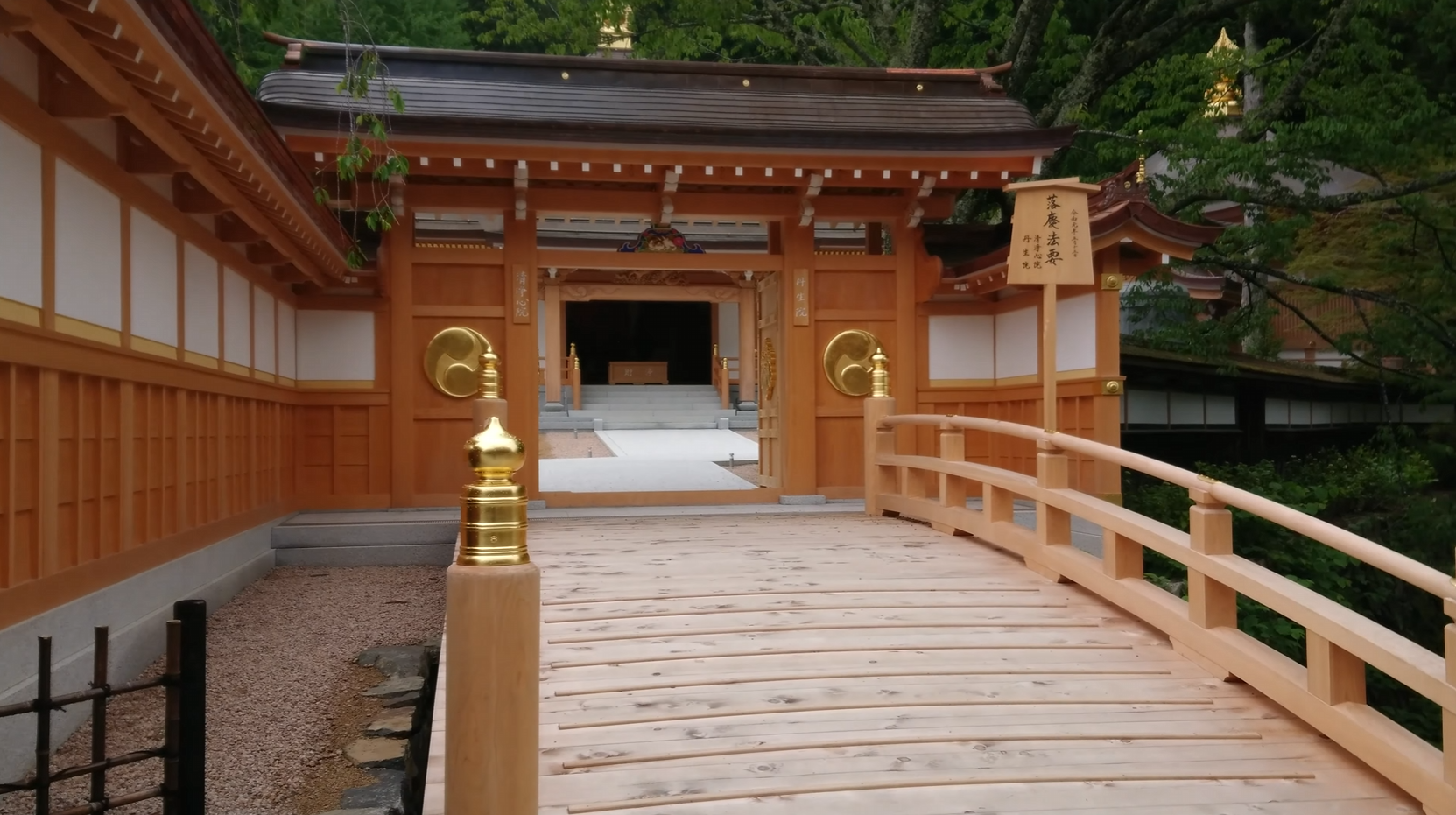
About the temple
Shojoshin-in is one of the largest and most venerated temple-lodgings (shukubo) on Mount Koyasan, with capacity for over a hundred guests and a history dating back to the very origins of the monastic complex founded by Kukai in the 9th century. More than a simple place to sleep, Shojoshin-in offers a complete immersion in the monastic life of esoteric Shingon Buddhism: guests wake before dawn to attend sacred fire ceremonies, share ritual vegetarian meals known as shojin ryori, and have the opportunity to walk at night through Okunoin cemetery, Japan's most sacred, lit only by the stone lanterns flanking its paths among ancient cedars. It is one of the most profound and authentic spiritual experiences Japan offers any traveler.
History
The history of Shojoshin-in is inseparable from the history of Mount Koyasan itself, one of the most sacred places in Japanese Buddhism. In 816, the monk Kukai — known posthumously as Kobo Daishi, the Great Master of the Doctrine — received permission from Emperor Saga to establish a monastic complex on the summit of Mount Koya, in the mountains of Wakayama Prefecture. Kukai had spent years studying esoteric Shingon Buddhism in China and his vision was to create in Japan a center of spiritual practice removed from the worldly noise of cities. The Koyasan monastic complex grew during subsequent centuries to become one of Japan's most important religious centers, with over a hundred active temples and a monastic community of several thousand monks. Shojoshin-in was one of the temples founded in the first centuries of the complex's existence, becoming over time one of the most distinguished for its size and the quality of its accommodation for pilgrims and devotees. Historically, Koyasan was a pilgrimage destination reserved almost exclusively for men — for centuries women were forbidden from accessing the sacred mountain. This prohibition was gradually lifted during the Meiji period, and today Shojoshin-in receives guests of all genders, nationalities, and religious beliefs. The temple's opening to international visitors throughout the 20th century transformed the shukubo from an exclusively Japanese pilgrimage site into a spiritual destination of worldwide reach. During World War II, Koyasan was one of the few places in Japan that did not suffer bombing, allowing the complete preservation of its architectural and artistic heritage. Shojoshin-in therefore preserves original elements of its historical construction that in other parts of the country were irreparably destroyed during the conflict. The central figure of all Koyasan spirituality, and therefore of Shojoshin-in, is Kukai himself. According to Shingon tradition, Kukai did not die in 835 but entered a state of eternal deep meditation in his mausoleum at Okunoin, where he remains to this day awaiting the arrival of the future Buddha, Maitreya. This belief gives any visit to Koyasan a unique spiritual dimension: one is not visiting a historical site but the dwelling of an enlightened being who, according to tradition, is still alive and present.
🎴 Curiosities
Shojoshin-in is less than ten minutes' walk from Okunoin cemetery, Japan's most sacred, where over 200,000 people are buried beneath cedars over 400 years old — among them emperors, shoguns, and the founders of some of Japan's most important companies
The nocturnal walk through Okunoin from Shojoshin-in, with only the sound of footsteps on leaves and the gentle flickering of stone lanterns, is described by many visitors as one of the most transformative experiences of their lives
The goma fire ceremony attended by guests at dawn is an esoteric Shingon ritual that has been practiced without interruption at Koyasan since the 9th century. In it, the officiating monk throws into the sacred fire pieces of wood on which the faithful have written their desires and illusions, symbolizing their destruction to achieve spiritual clarity
The shojin ryori food served at Shojoshin-in is a form of culinary art in itself: made exclusively with vegetables, tofu, and seaweed according to Buddhist precepts, it dispenses not only with meat and fish but also with the five strong-smelling vegetables — onion, garlic, leek, chive, and shallot — considered stimulants of the passions
Kukai, Koyasan's founder, is considered the greatest calligrapher in Japanese history, the inventor of one of the two Japanese syllabaries (hiragana), and the introducer of sesame, tea, and sugar to Japan — in addition to being a spiritual master, he was an intellectual and artist of extraordinary dimensions
The Shingon tradition teaches that Kukai has not died but is in eternal meditation at Okunoin — every day Koyasan monks bring two meals to his mausoleum as if he were alive, a practice maintained without interruption for over 1,100 years
Mount Koyasan was declared a UNESCO World Heritage Site in 2004 as part of the Kii Pilgrimage Routes, which also include the Kumano trails and Yoshino shrine
Sleeping at Shojoshin-in means sharing the same space as the monks who practice there — some guests who have had the opportunity to converse with them describe these conversations as moments of clarity and perspective difficult to find in daily life
The reservation system for Shojoshin-in and other Koyasan shukubo is now managed through international platforms, but the interior experience remains exactly the same as that of the medieval pilgrims who walked the mountain paths to reach here
In winter, when snow covers Okunoin's cedars and the smoke from fire ceremonies rises in the frozen air, Koyasan offers perhaps its most powerful and memorable image