About the temple
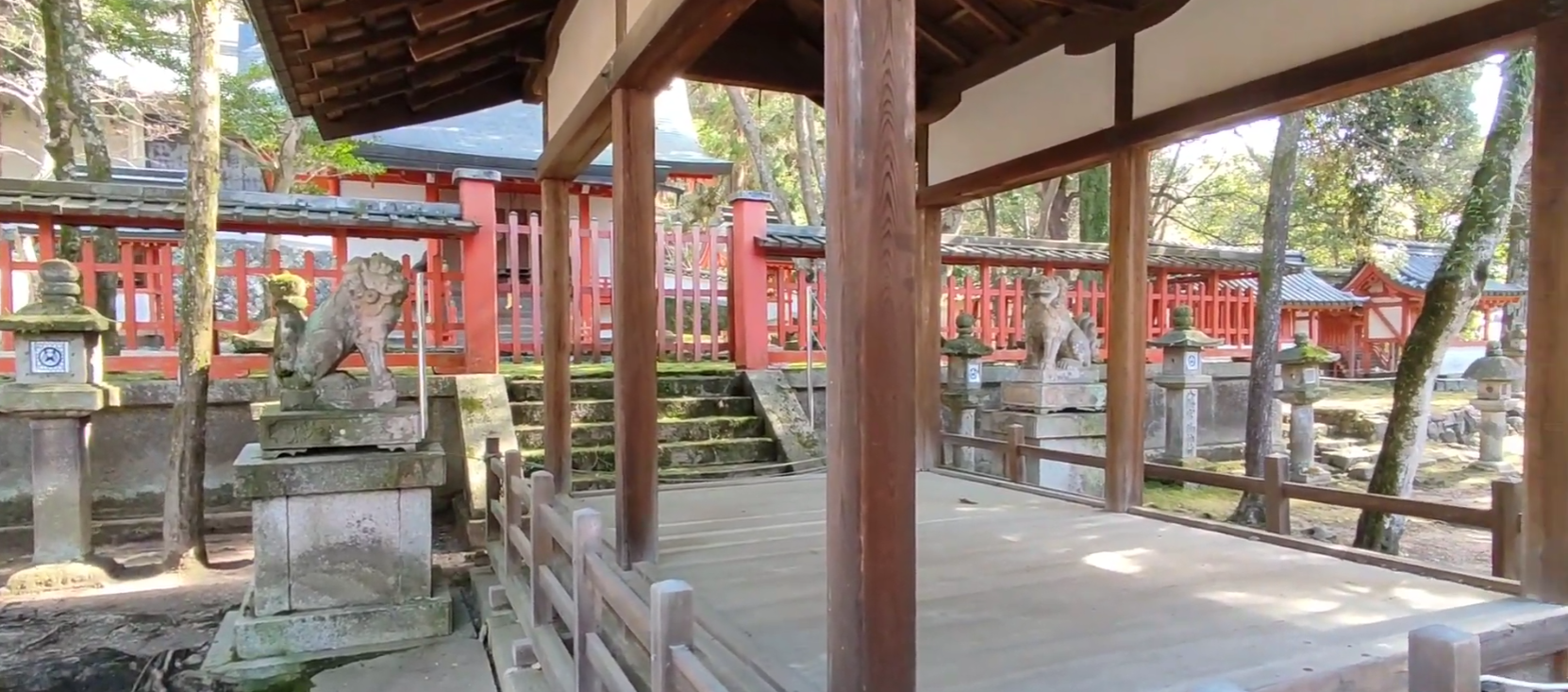
Tamukeyama Hachimangu is an ancient and serene Shinto shrine located on a hill next to Tōdai-ji, in Nara Park. Founded as the divine protector of the Great Buddha and the grand temple, this shrine dedicated to Hachiman (the god of war and protection, identified with Emperor Ōjin) offers an oasis of tranquility with views of the forest and Nara's millennial structures. Its privileged location, surrounded by cedars and sacred deer that roam freely, conveys a profound sense of spiritual protection. The vibrant vermilion wooden buildings contrast with the intense green of the surroundings, creating an image of perfect harmony between the divine and nature. It is a place where Shinto faith intertwines with the history of Japanese Buddhism, recalling the moment when the gods were invoked to safeguard the construction of the Daibutsu.
History
Tamukeyama Hachimangu was founded in 749 (Tenpyō-shōhō era), during the construction of the Great Buddha at Tōdai-ji. According to tradition, Emperor Shōmu invoked the gods from Usa Hachimangu (in Kyushu), the head shrine of Hachiman, to protect the colossal project of the Daibutsu. The kami of Hachiman came to Nara to watch over the casting and the temple, and this shrine was established as their permanent residence and as the protector (chinju) of Tōdai-ji. It was originally located closer to the Daibutsu-den but was moved to its current hilltop location. The buildings suffered damage from fires, especially in 1180 during the Genpei War. The current shrine mainly dates from the Kamakura period (around 1250) and was rebuilt on several occasions, with a major renovation in the Genroku era (1691). After the separation of Shinto and Buddhism in the Meiji era, it became completely independent from Tōdai-ji. Today it maintains its role as the spiritual guardian of the Great Buddha and is part of Nara's rich heritage.
🎴 Curiosities
The name “Tamukeyama” means “mountain of the offering” (tamuke = offering), referring to the prayers and offerings made to protect the construction of the Great Buddha
It is primarily dedicated to Hachiman (Emperor Ōjin), along with Emperor Nintoku, Empress Jingū, and Emperor Chūai. It is a Hachiman shrine closely linked to the main one at Usa in Kyushu
Every October 5, the annual festival is held with a mikoshi procession that recreates the legendary journey of the gods from Usa to Nara to protect Tōdai-ji
The shrine's treasure house (hōko) is built in azekura style (triangular wooden storehouse) and is an Important Cultural Property; it was relocated from Tōdai-ji
It is located on a quiet hill behind Tōdai-ji, away from the main crowds of the park, giving it a particularly serene and mystical atmosphere
Nara's sacred deer roam freely around the area, adding magic to the precinct (they are considered divine messengers)
Sugawara no Michizane, the famous scholar, composed a waka here during his exile, offering maple leaves as an offering instead of nusa (ritual paper)
The torii and approach path (sando) offer beautiful views, especially in autumn when the maples turn the forest red
Although it is a Shinto shrine, its history is deeply intertwined with the Buddhism of Tōdai-ji, reflecting the shinbutsu-shūgō (syncretism) that existed for centuries
It is an ideal place for those seeking a quieter corner in Nara Park, with fewer tourists and a direct connection to the divine protection of the Great Buddha