About the temple
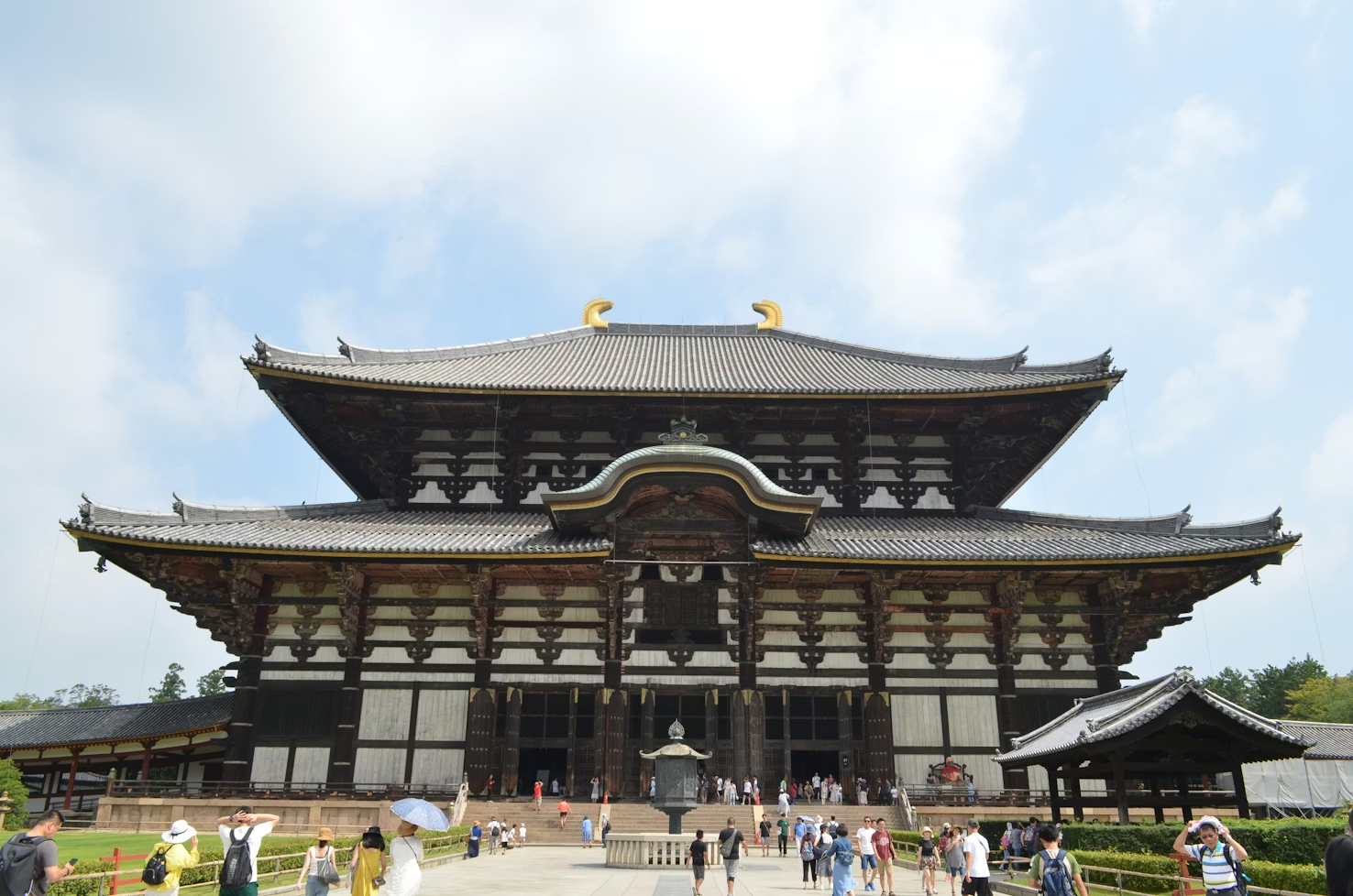
Tōdai-ji, known as the Great Eastern Temple, is one of the most impressive and symbolic monuments in Japan. Located in the heart of Nara Park, this Kegon sect Buddhist temple houses the Daibutsu, the colossal bronze statue of Vairocana (Birushana Butsu), which represents the universal essence of the Buddha and symbolizes divine protection for the country. The Daibutsuden (Great Buddha Hall), the largest wooden building in the world, impresses with its monumental scale: its cypress pillars and imposing structure make visitors feel small before the spiritual and human grandeur of the Nara period. Surrounded by sacred deer and ancient forests, Tōdai-ji is not just a temple, but a living testament to the moment when Buddhism became a state religion and a beacon of peace and prosperity for all Japan. Declared a UNESCO World Heritage Site, it continues to convey a sense of eternal awe and serenity.
History
The history of Tōdai-ji begins in 728 with the temple Kinshō-ji, founded by Emperor Shōmu for the repose of the spirit of his son, Crown Prince Motoi. In 741, Shōmu ordered the creation of a national system of provincial temples (Kokubun-ji), and Kinshō-ji was elevated to the main temple. In 743, the emperor proclaimed the construction of a Great Buddha to protect the country from disasters and epidemics. The casting of the Vairocana statue began in 743 (initially in Shigaraki) and was completed in 749. The Daibutsuden was built simultaneously and the consecration ceremony (Daibutsu Kaigen) took place in 752, with the presence of the retired emperor Shōmu, Empress Kōmyō, and monks from across the Buddhist world, including the Indian monk Bodhisena, who painted the eyes of the statue. The temple became the head of the Kegon sect and the main temple of all Kokubun-ji. It suffered severe destructions: in 1180 during the Genpei War (fire set by Taira no Shigehira's troops) and again in 1567. The current Daibutsuden dates from 1709 (Genroku era), rebuilt to two-thirds of its original size due to economic limitations. The Daibutsu statue has also been restored several times, the last in 1692. In 1998 it was inscribed as a UNESCO World Heritage Site as part of the Historic Monuments of Ancient Nara.
🎴 Curiosities
The Daibutsu measures 14.98 meters in height (seated), weighs approximately 500 tons and is made of bronze with traces of original gilding. Its open hand is the size of an adult and its face measures over 5 meters
The current Daibutsuden is the largest wooden building in the world, although it is only two-thirds the size of the original (which measured about 88 x 52 meters). Its 84 enormous cypress pillars are an engineering feat
In one of the hall's pillars there is a hole the size of the Daibutsu's nostril: tradition says that whoever passes through it will attain enlightenment (especially popular among children)
The temple originally housed two nine-story pagodas, the tallest of their time, which no longer exist
The 752 consecration ceremony was one of the grandest events in Japanese history, with thousands of monks and dignitaries from across Asia
In addition to the Daibutsu, there are impressive statues such as the guardian figures (Kongō Rikishi) at the Nandaimon, carved by Unkei and Kaikei in the 13th century
The Shōsō-in, the temple's treasure storehouse, preserves over 9,000 objects from the Nara period, including Silk Road treasures. They are only partially exhibited in autumn
Nara's sacred deer roam freely through the precinct and are considered divine messengers
The Kegon sect, of which Tōdai-ji is the head temple, emphasizes the interconnection of all phenomena (the “Indra's net”)
During the Omizutori (March festival at Nigatsu-dō, part of the complex), the famous sacred water ritual is performed that attracts thousands of pilgrims
Although it has been destroyed and rebuilt several times, Tōdai-ji continues to convey Emperor Shōmu's original ideal: using Buddhism to bring peace and protection to the nation