About the temple
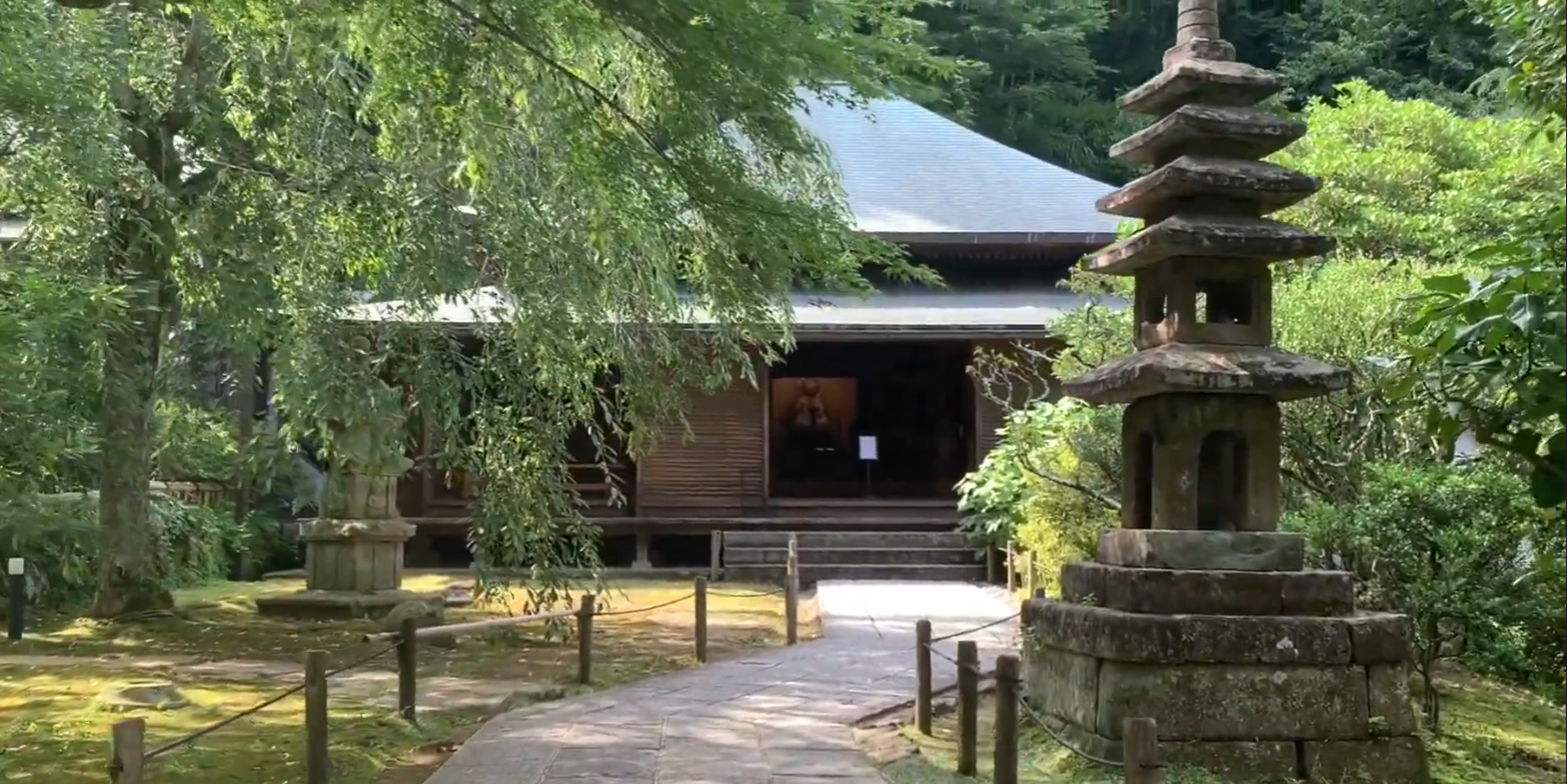
Tokei-ji, known as the “Divorce Temple” or “Enkiri-dera”, is one of the most unique and moving Zen temples in Kamakura. Located in a wooded valley in Kita-Kamakura, surrounded by a garden that blooms with beautiful flowers in every season, this small Rinzai sect temple (Engaku-ji branch) holds a history of courage and compassion toward women. Founded as a convent, for over 600 years it served as a sacred refuge for those fleeing abusive marriages. Its serene atmosphere, with shaded paths through trees, an ancient belfry, and a wooden main hall, conveys a profound sense of protection and rebirth. Today it is a place of Zen peace and natural beauty, where the legacy of female empowerment merges with meditative practice in an environment that invites contemplation and reflection.
History
Tokei-ji was founded in 1285 (Kōan 8 era) by Kakusan-ni (also known as Kakuzan-ni or Horiuchi no Tsubone), widow of Regent Hōjō Tokimune (who died young at age 34). With the support of her son, Regent Hōjō Sadatoki, Kakusan-ni established the temple as a convent to pray for her husband’s soul and, at the same time, as a refuge for abused women. During the Kamakura period and especially in the Edo era, it functioned as one of the few officially recognized “kakekomi-dera” (refuge temples). A woman who took shelter at Tokei-ji and stayed for three years (later reduced to two) could legally obtain a divorce, something almost impossible in feudal Japanese society where only men could initiate divorce. It is estimated that around 2,000 women sought this protection during the Edo period. It was one of the five nunneries of Kamakura (Amagozan), ranking second in hierarchy. Among its notable abbesses were an imperial princess (daughter of Emperor Go-Daigo) and Tenshū-ni (adopted daughter of Toyotomi Hideyori). After the Meiji Restoration, it lost its authority to grant divorces in 1873 and became a mixed temple of the Rinzai sect. In 1905, Zen master Sōen Shaku (teacher of D.T. Suzuki) helped with its restoration.
🎴 Curiosities
Tokei-ji is famous as “Enkiri-dera” (temple to sever ties) or “Kakekomi-dera” (temple one runs into for refuge). A woman who entered the temple and stayed for three years (later two) automatically obtained a legal divorce, a unique system in feudal Japan
It is said that even if the gates were closed, a woman could begin her refuge by throwing a kanzashi (hairpin) or waraji (straw sandals) into the precinct
It is one of the few surviving nunneries from the “Amagozan” (the five mountains of nuns of Kamakura) and for centuries was exclusively for women (men were strictly prohibited)
The temple is known as the “Temple of Flowers”: plum blossoms, magnolias and cherry blossoms in spring; irises and hydrangeas in summer; autumn foliage in fall; and camellias in winter
On the grounds there is a belfry that survived the 1923 Great Kantō Earthquake and a main hall rebuilt in 1935
Among the famous abbesses is Tenshū-ni, who at age 7 was sent to the temple by Tokugawa Ieyasu and later interceded to protect other women
The temple preserves historical divorce documents (“tokei” or separation certificates) and a diary recording cases of women who took refuge
Today it is an active Zen temple where meditation is practiced, and its cemetery holds figures such as philosopher Nishida Kitarō and Zen scholar D.T. Suzuki
It is very close to Engaku-ji, on the other side of the railway tracks, making it easy to visit both on a pleasant walk through Kita-Kamakura
The tranquil atmosphere and botanical garden make Tokei-ji an ideal place to reflect on female resilience and compassion in Japanese history