About the temple
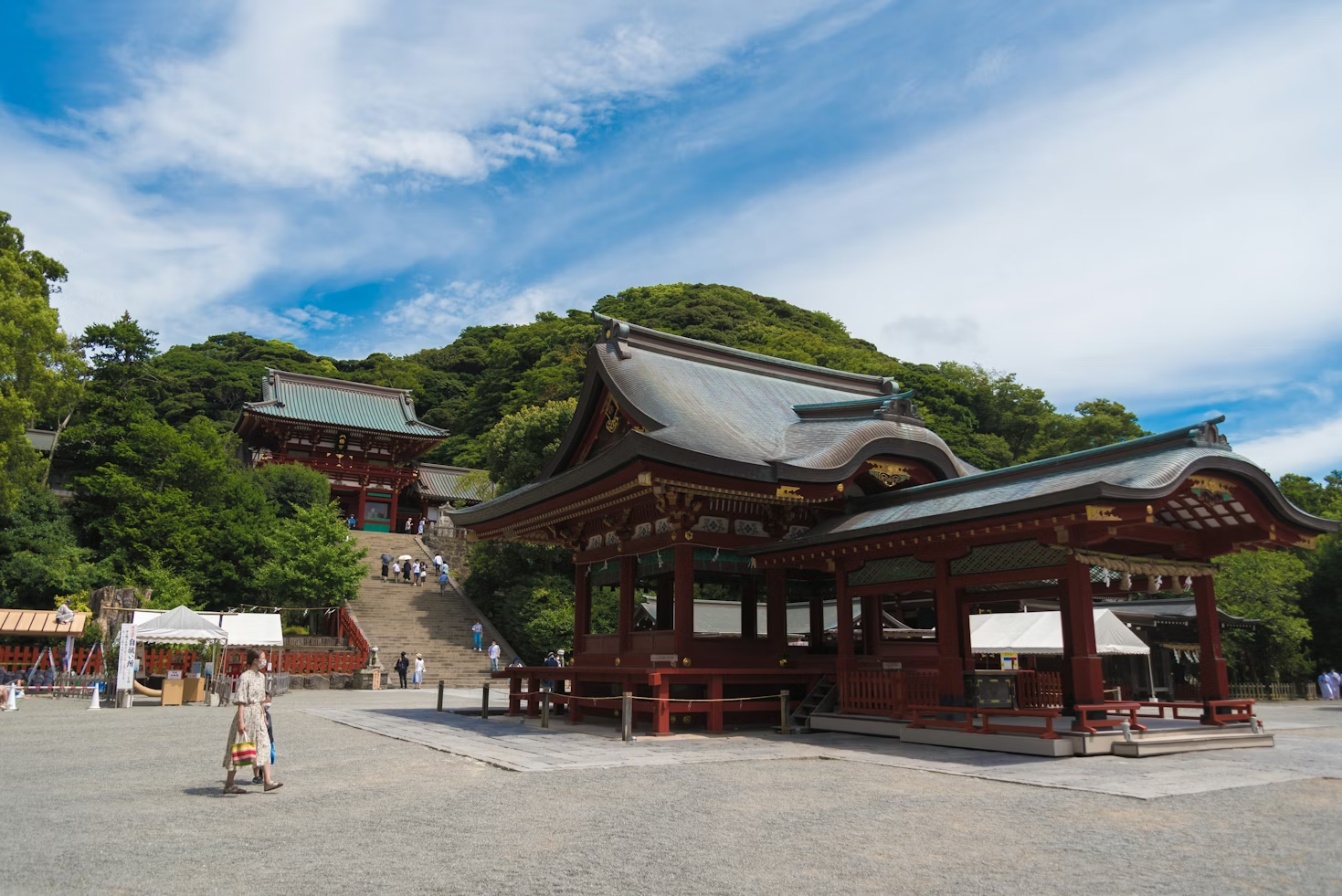
Tsurugaoka Hachimangu is the spiritual and symbolic heart of Kamakura, the most important Shinto shrine in the city and one of the most emblematic of the samurai period. Located at the end of a long avenue lined with cherry trees, this shrine dedicated primarily to Hachiman (the god of war and protector of warriors) rises majestically on a hill, dominating the landscape with its stone stairway and vermilion main hall. Founded as the protector of the Minamoto clan and the first shogunate of Japan, it combines ancestral devotion with architectural beauty that reflects the power and elegance of the Kamakura era. Its twin ponds —one with three islands (Minamoto) and one with four (Taira)— recall the historical rivalry between the clans, while its serene atmosphere invites visitors to connect with the warrior spirit and the history that forged medieval Japan. It is a place where the samurai past still beats strongly amid today's tranquility.
History
The history of Tsurugaoka Hachimangu dates back to 1063, when Minamoto no Yoriyoshi established a small branch shrine of Iwashimizu Hachimangu (in Kyoto) in the Zaimokuza area (present-day Moto Hachiman) to give thanks for victory in the Earlier Nine Years' War. In 1180, Minamoto no Yoritomo, founder of the Kamakura shogunate and Japan's first shogun, moved the shrine to its current location so that Hachiman would protect his new government. Yoritomo made the shrine the religious and political center of Kamakura, establishing it as the tutelary shrine of the samurai and the Minamoto clan. For centuries it also functioned as a Tendai Buddhist temple (shinbutsu-shūgō), which explains its architectural layout. It suffered fires and damage, including a major one in 1280. After the Meiji Restoration and the separation of Shinto and Buddhism (1873), it regained its purely Shinto character. The current buildings, in Hachiman-zukuri style, mainly date from the Edo period, with later reconstructions. The shrine has witnessed key events, such as the assassination of the third shogun Minamoto no Sanetomo in 1219 on its steps.
🎴 Curiosities
The shrine is dedicated to Hachiman (identified with Emperor Ōjin), along with Empress Jingū and Hime-gami. It is the tutelary shrine of the samurai and the Minamoto clan
The twin ponds (Genpei-ike) are symbolic: the Minamoto pond has three islands (a lucky number) and the Taira pond has four islands (the number four is pronounced the same as “death” in Japanese), representing the rivalry between the two clans
The grand stone stairway leads to the main hall (Hongu), from where there are panoramic views of Kamakura. To the left of the stairs stood until 2010 a huge ancient ginkgo tree that once served as a hiding place in an assassination attempt on a shogun
The main festival is the Reitaisai (September 14-16), featuring yabusame (horseback archery), processions, and traditional dances
Wakamiya Ōji avenue, which leads to the shrine, is lined with cherry trees and stone lanterns, and is especially beautiful during sakura season
Until the Meiji era, the complex included Buddhist temples; that is why its layout resembles a Zen or Tendai temple
In the precinct there is a small museum with shrine treasures and a peony garden that opens in spring and winter (separate entrance)
It is said that Yoritomo planted cherry trees along the path to celebrate his victory and attract good fortune
The shrine has been the scene of dramatic events, such as the assassination of Minamoto no Sanetomo in 1219, which marked the end of the direct Minamoto line
It is one of the most visited shrines in Kamakura and receives millions of people during Hatsumode (first shrine visit of the year)