About the temple
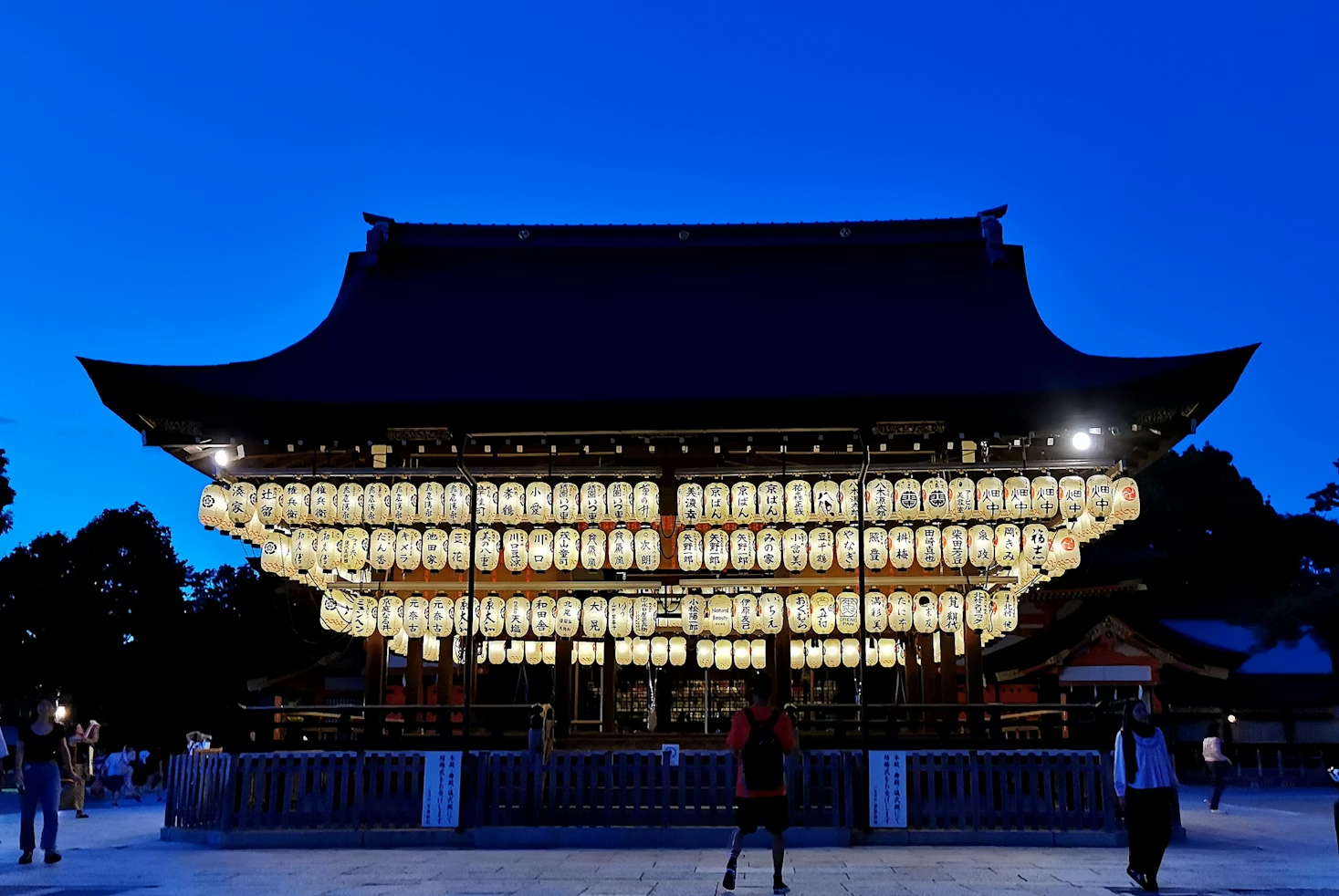
Yasaka Jinja, affectionately called “Gion-san” by Kyoto locals, is one of the most vibrant and beloved Shinto shrines in the ancient capital. Located on the border between the Gion and Higashiyama districts, this shrine stands as a guardian against epidemics and misfortune, with its buildings in intense vermilion that contrast beautifully with the green of the mountains and the bustle of the city. Dedicated primarily to Susanoo-no-Mikoto (historically identified with Gozu Tenno), a powerful deity who protects against plagues and brings good fortune, Yasaka Jinja radiates a joyful and protective energy. Its large stone torii and the main hall in a unique style (Gion-zukuri) welcome thousands of worshippers and visitors who come to pray for health, business success, and protection. It is the spiritual soul of the famous Gion Matsuri, and its atmosphere combines ancestral devotion with the vitality of popular Kyoto, creating an experience where the sacred and the everyday intertwine naturally and movingly.
History
The history of Yasaka Jinja dates back to the year 656 (Empress Saimei era), when, according to tradition, a Korean emissary named Irishi (or a group of immigrants) established a small shrine to venerate the deity of Gozu Mountain (in Korea), identified with Susanoo-no-Mikoto. Another version mentions that in 876 the monk Ennyo built a Buddhist temple on the site and the deity descended to the Gion forest. In 869, during a severe epidemic, Emperor Seiwa ordered the erection of 66 spears (hoko) representing the provinces of Japan and the carrying of the shrine's mikoshi to appease vengeful spirits. This ritual marked the origin of the Gion Matsuri, which became an annual event from 970. Originally called Gion Kanshin-in or Gion-sha, it functioned as a combined temple-shrine (shinbutsu-shūgō) for centuries. After the Meiji Restoration and the separation of Shinto and Buddhism (1868-1870), it changed its name to Yasaka Jinja. The current buildings mainly date from 1654, rebuilt by order of Shogun Tokugawa Ietsuna. Today it is the head shrine of all Yasaka Jinja in the country (more than 2,300) and remains a center of popular faith against calamities.
🎴 Curiosities
The shrine is famous for the **Gion Matsuri**, one of Japan's three great festivals (along with Tokyo's Kanda Matsuri and Osaka's Tenjin Matsuri). It is celebrated throughout the month of July, with the highlight being the yamaboko (festival floats) processions on July 17 and 24
The main deity is Susanoo-no-Mikoto (along with Kushinadahime and their eight children), but historically it was venerated as Gozu Tenno, protector against epidemics and diseases
The architectural style of the main hall is called **Gion-zukuri**: the honden and haiden are under a single roof, a unique form in Japan
The large western gate (Nishi Rōmon) is an important cultural property and one of Kyoto's most photographed visual symbols, especially when illuminated at night
There is a famous “beauty water” (biyō-sui) in the precinct: visitors wash their face or hands believing it grants beauty and good health
The shrine especially attracts prayers for **yakuyoke** (protection against bad luck), **byōki heiyu** (healing of illnesses), **shōbai hanjō** (business success), and **en-musubi** (union of destinies)
During Hatsumode (first shrine visit of the year) it receives millions of people, and in July the Gion Matsuri transforms the entire neighborhood into a vibrant festival
In the precinct there is a Noh theater and a stage where dances and ceremonies are performed during the festival
Until the Meiji era, the complex included Buddhist temples; the name “Gion” comes from Jetavana (Gion Shōja), the monastery where Buddha preached in India
The stone torii and red lanterns create a magical atmosphere at dusk, when the shrine is illuminated and filled with a festive and spiritual vibe